MILLARD COUNTY, UT — Tech companies have announced plans to build the world’s largest data center in one of America’s driest states, because irony pairs well with server racks. The project, dubbed the Delta Gigasite, will span nearly 20 million square feet and guzzle power like a frat party keg, except with less regret and more carbon offsets.
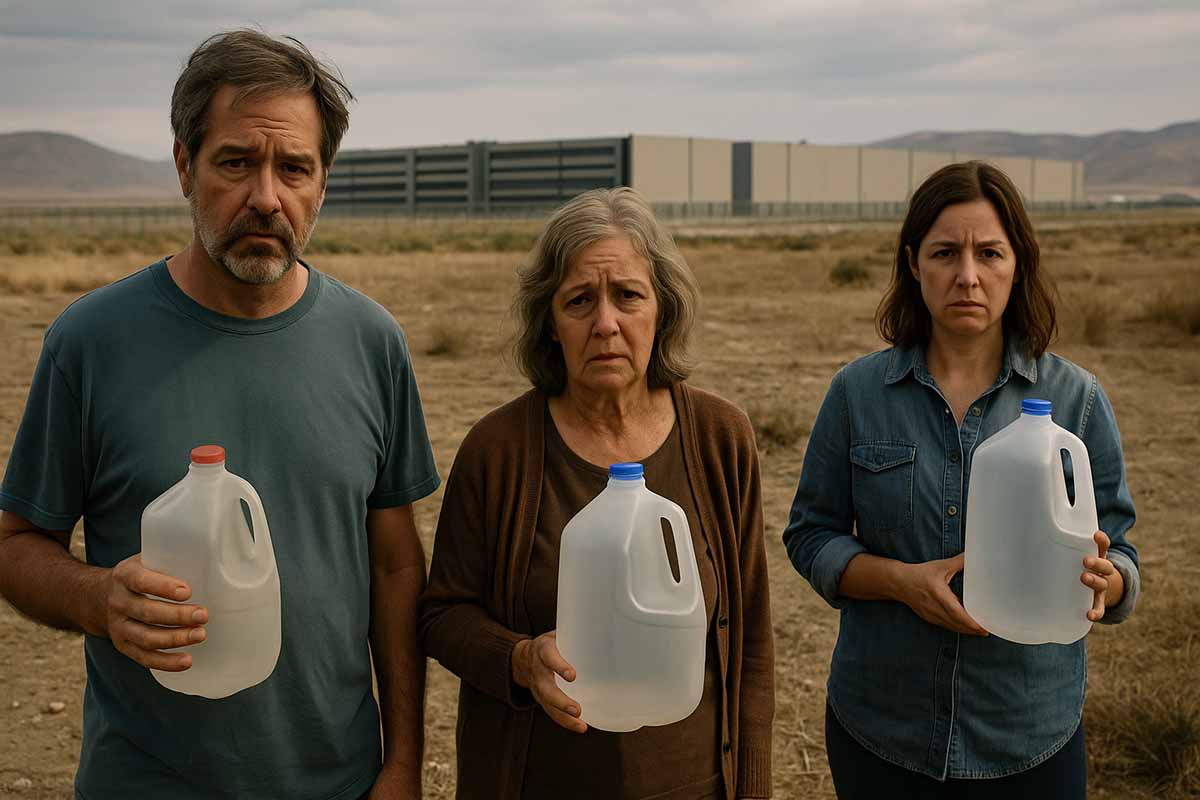
Local officials are optimistic. “Sure, it might drink more water than our entire county combined,” said one city planner while eyeing his browning lawn, “but at least we’ll have tax revenue to buy bottled water on Amazon.”
Developers insist their AI-powered servers won’t just consume water — they’ll create it, promising a “net water positive” system that sounds suspiciously like a Silicon Valley version of Moses striking the rock. “We’ve essentially reinvented rain,” one engineer bragged, pointing to a closed-loop cooling system that condenses moisture from thin desert air. Locals have begun calling it “Jesus 2.0 — now in liquid cooling.”
Environmentalists are less impressed. “Utah is already the third driest state,” noted one activist. “This project is like building a snow cone factory in hell and insisting the devil will provide ice.”
Meanwhile, a competing developer has proposed a separate 4,000-acre campus powered by Caterpillar generators. Critics worry this will make Utah the first state where Skynet is literally fueled by farm equipment.
Despite concerns, state leaders remain confident the projects will transform central Utah into the Silicon Valley of sand. “These aren’t just data centers,” said one booster. “They’re climate-controlled oases where your memes and Minecraft saves can live forever — even if your crops can’t.”
At press time, residents were reportedly weighing the trade-offs: fewer showers and smaller lakes in exchange for the privilege of hosting AI models that can write bad poetry and misidentify raccoons as cats.